
Kyoto 3 Day Itinerary

Updated: Jan 11

One of the most popular cities in Japan is Kyoto. There is a real reason for this. It has beautiful hiking trails, a magnificent history, endless amounts of Shinto shrines, and great food markets for visitors to enjoy. If you are looking for the sites to see in Kyoto, you have come to the right place.
FLY INTO OSAKA AND TAKE THE TRAIN
For those who are unfamiliar, Kyoto does not have its own airport. The closest airport to Kyoto is the KIX (Kansai International Airport), which is located in the nearby city of Osaka. After booking your flight, you will need to book your transportation from Osaka to Kyoto. If you want to take a private car, it can cost $150 to $200 USD. I would recommend taking the train instead. You can find great prices on the Klook website here. Please keep in mind that you do need to make reservations in advance from the airport to Kyoto. After purchasing the voucher, you must download the JR West app on the App Store to redeem it. Please do this before you leave the airport, because it can be quite busy and stressful if you don’t. You can find step-by-step instructions here.
Once you get your tickets, please note that there are specific train cars with reserved seats and those without. Make sure to find your train car that corresponds with your ticket, as there will be people who come to check. The train ride is about 1 hour and a half. The train rides are not 24/7, so make sure that you plan your flight to arrive at a time when the train is still running to Kyoto. You can find trains here.
Day 1: Discovering Arashiyama
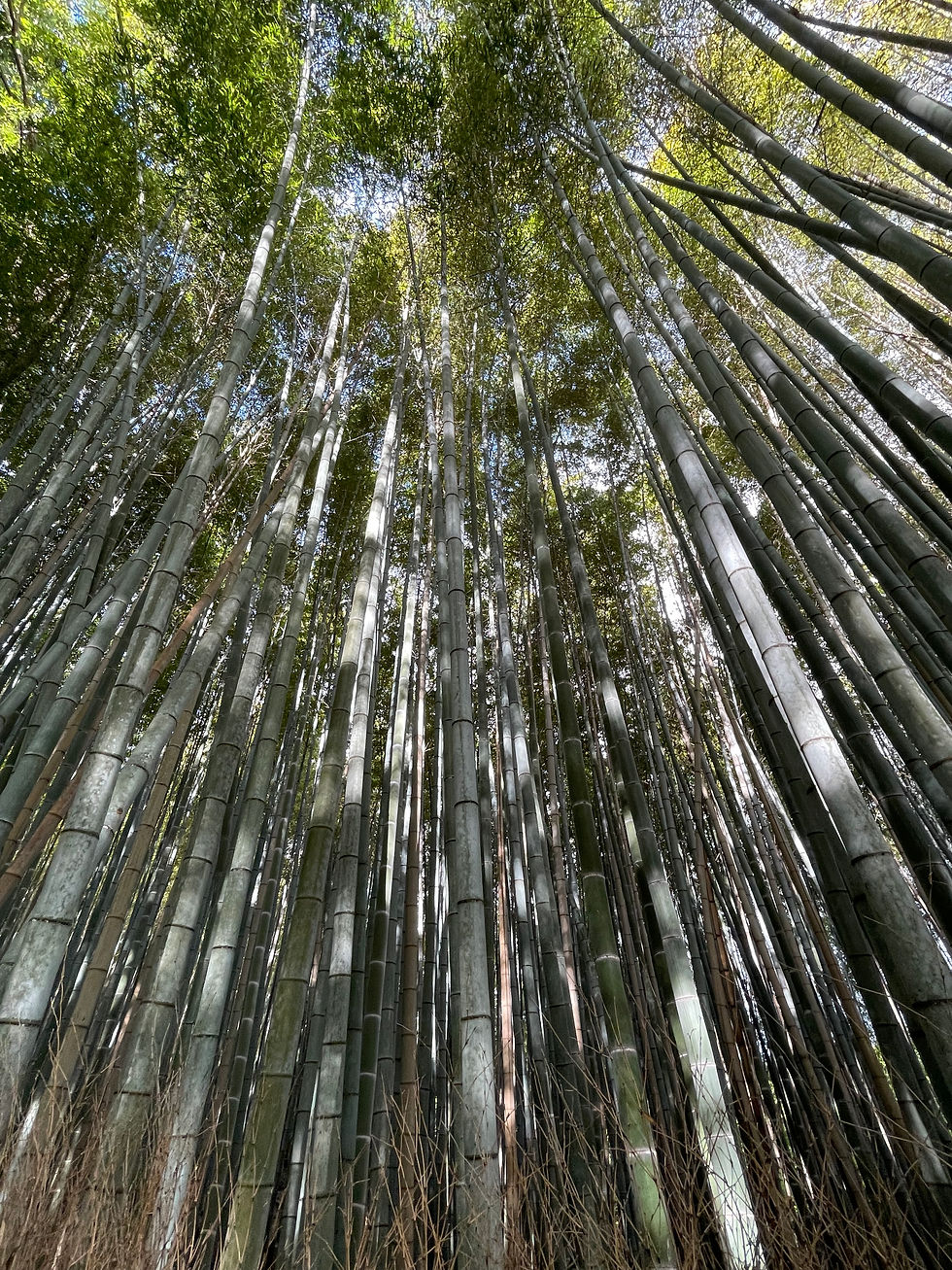
Our first adventure in Kyoto is one of the most popular places, the Arashiyama Bamboo Grove. The Bamboo Grove is free to visit and open every day: 7:00 AM - 10:00 AM, 11:30 AM - 2:30 PM, and 5:00 PM - 9:00 PM. The bamboo grove is very peaceful. There are many signs asking visitors to respect the peaceful nature and refrain from talking loudly to allow people to take in the sights as intended.
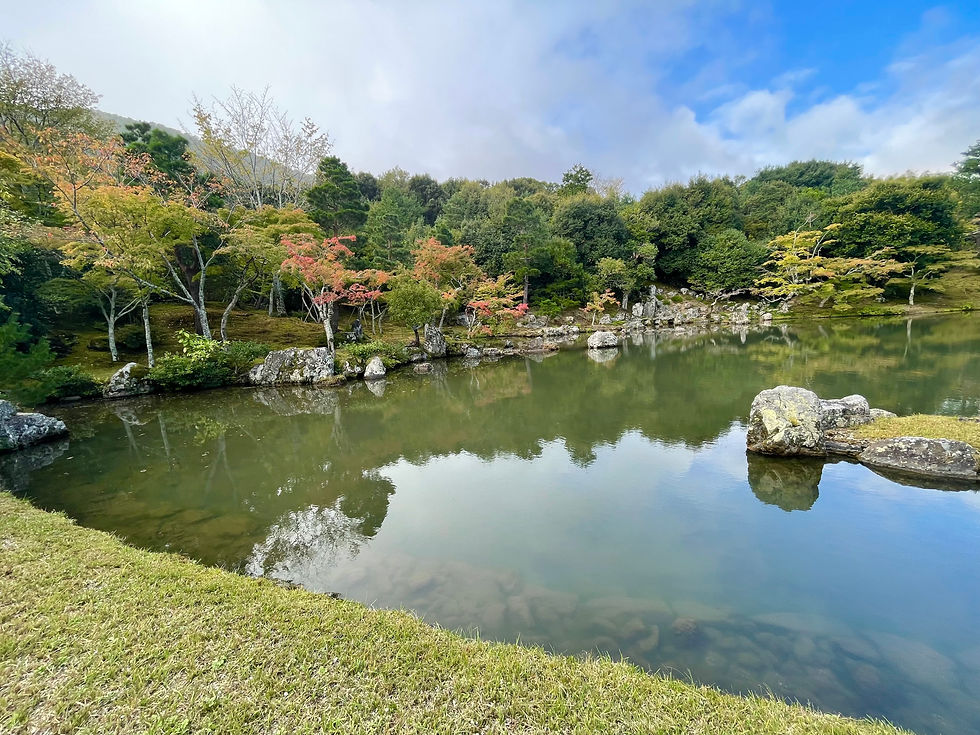
After the Bamboo Grove, our next stop was Tenyru-ji Temple. This temple is within walking distance of the bamboo grove. This site was the site of Japan's first Zen temple and remains the first among Kyoto's Five Mountains. It was constructed in 1345 and stands to this day. Entrance fees are cash only, and there are separate entrances for the gardens and one for the pavilion. For more specifics on sites within the temple, you can check that out here.
Once we finished with the temple, we walked for a little over 50 minutes to our next site, which is Iwatayama Monkey Park. The entrance fee is cash only. The walk is a bit steep and takes about 20-30 minutes. Once you get to the top, you'll see a fabulous view of the city of Kyoto and a giant banana that you can take pictures on.
You can choose to enter the monkey enclosure, where you can safely feed the monkeys while being enclosed. The monkeys are roaming freely, and it's fascinating to see them interact with each other and with their environments.
After the monkey park, we headed back to town to check out some shops along the Hozu River. We decided to have lunch along the river. Once you finish lunch, you can choose to shop around or do a river cruise along the Hozu River. You can find that option here.
We decided to go back to our hotel for some relaxation. Once rested, we headed over to the Pokémon and Sanrio store. One thing that I love about Japan is finding all of these specialty shops where you can find all types of unique items. After shopping, we decided to head over to see a show at the Non-verbal Theater. It's a cool show where you can see different characters and still understand the story for there is no dialogue. You can find more info here.
Day 2: Exploring Kyoto's Historic Charm

The next day, we decided to check out some historical sites. Our first stop was Fushimi Inari Taisha. Known as the Tori gates, this is one of the most popular places in Kyoto. Once you get off the train, you can walk over to the gates to explore the over 10,000 tori gates. All of the gates are donated by individuals or companies and can range from 400,000 yen to 1 million, depending on size. If you want to explore all of them, it will take about 2-3 hours. I would recommend going as far as you can to get better pictures, but the top is not something that I would say is a must go to. Many visitors choose to stop at the Yotsutsuji intersection to view the city.

Once we finished the Tori Gates, we headed over to the Nijo Castle. The Nijo Castle is the palace where many of the shoguns of Japan used to reside. The castle grounds contain the Ninomaru Palace, where you can view the decorated ceilings and the fusuma (sliding doors), the Honmaru Palace, and the surrounding beautiful gardens. It is a great place to imagine how the shoguns used to live and the visitors who used to visit them.

After the castle, we found lunch nearby and then headed over to the Kinkaku-ji (Golden Pavilion). To get to the Golden Pavillion requires taking a bus. Taking the bus in Kyoto, riders pay after they get off. The Golden Pavilion is a Zen temple that has two floors covered in gold leaf and was the place where shogun Ashikaga Yoshimitsu retired. Although you cannot enter the temple itself, the view is breathtaking to see. Visitors can shop at different souvenir shops and light candles to make wishes on things like health, career, riches, family, etc.
Day 3: Wandering around Kyoto

On our last day in Kyoto, we wanted to find more areas to explore with a loose itinerary. Our first stop was the Kiyomizu-dera Temple (Water Temple). On our way to the temple, we discovered the Koyasu-no-to Pagoda which was really cool to see. As one of my favorite places, the Kiyomizu-dera temple is a Buddhist site that has stunning views of nature, where you can see a sea of color in the spring (March-April) or Fall (Late November). There are plenty of opportunities to drink from the stream of water, which is said to provide longevity. There are also many hiking trails to explore after coming out of the temple. On your way to the Gion district, you can stop by Yasaka Pagoda for the most picturesque pic in Kyoto.
Afterwards, we headed over to the Gion district. The Gion district is better known as the Geisha district. It is here that you can find people dressed in a kimono. Please keep in mind to be respectful. This is a great place to discover the trendy restaurants. Once we finished exploring this area, we headed over to the Nishiki Market. The Nishiki Market is a fresh food market that stretches for over five blocks. The market can range from one shop to multiple stalls. In Japanese culture, it is frowned upon to eat and walk at the same time. We found a section inside the market that not only had multiple stalls in one area but a restroom as well. It made it much easier to enjoy.
Make sure to purchase your return train ticket back to Osaka and get there early as it is quite a big airport and may take awhile to get through security.


Comments